
Happy Wednesday everyone!
At The Ticket Clinic, we are big fans of top ten lists. This one from Popular Mechanics caught our eye earlier this week. We are particularly partial to #4. Be quiet. If you don’t make yourself memorable, there is a good chance that the officer won’t recall specifics of your incident and his or her testimony may be more susceptible to cross-examination. If you are a do-it-yourselfer, this article provides some good tips. But if you want an experienced traffic ticket attorney in your corner, consider calling The Ticket Clinic at 1.800.CITATION.
Drive safely and don’t forget that the “no texting and driving” law is in effect in Florida so put down your phones!
Not all states and counties have red-light cameras in use. According to a report by the Florida Department of Highway Safety and Motor Vehicles in 2017, 63 Florida jurisdictions implement the use of these devices.
Red light cameras are a relatively new photo enforcement technology that is becoming increasingly prevalent in Florida intersections. These devices are used to automate the process of recording drivers committing a red light violation, serving as a major ally in prosecution. As a driver passes over a sensor in the intersection while the traffic signal is red, a camera is activated, taking pictures of the driver and their front license plate. After the violation is recorded, an enforcement program issues a citation, which is then mailed to the registered owner of the vehicle. The red light camera can also capture up to 12 seconds of video as further evidence of the crime committed.
Due to the timeliness of these photos, many drivers are caught “red-handed” in an illegal act, like passing through an intersection while the signal is red. Though these may seem like indisputable pieces of evidence, there are still ways for drivers cited by these cameras to fight the tickets.
While many states vary in who is held responsible when a red light camera captures a violation, in the state of Florida, the registered owner of the vehicle receives the bill. This means that if someone is borrowing your car and triggers a red light camera, you will likely be the one to receive the citation.
In some situations, like in the case of a recently-sold car under new ownership or a stolen vehicle, the citation issued can be dismissed with the submission of an affidavit. It is recommended that drivers seeking dismissal should consult a local attorney specializing in traffic tickets for proper guidance.
Red Light Cameras in the state of Florida capture a number of violations, many of which are accompanied by a citation in the mail issued to the owner of the car. Failing to make a complete stop when turning right at a red light, passing through an intersection while the light is red, or stopping in the middle of an intersection during a red light can all result in a Notice of Violation (essentially, a ticket in the mail). Legally, each of these violations will result in a citation for s, 316.075(1)(c)1., Fla.Stat., which mandates drivers to come to a complete stop before a red light. These violations are captured in both photo and video form by the red light camera.
It is important to note that not all photos that were taken result in a violation. For instance, breaking beyond the line at a red light may trigger a camera without a violation having occurred. Every image captured by a red light camera is eventually reviewed by a police officer, who will decide whether the driver was in violation of traffic laws.
Over the years, there have been many debates over the legality of police departments utilizing red light cameras provided by third-party vendors. Florida’s House approved a statewide ban on these devices in 2017, however, soon after the Florida Supreme Court ruled that red light cameras are legal and may be used in the interest of public safety.
Since the ruling, some cities in Florida have chosen to end their use of Red Light Cameras, while others continue to use them. For instance, in Palm Beach County, only Boynton Beach is currently using these cameras.
For the most accurate information regarding the locations of red light cameras, drivers should check their city’s website. Most cities post the location of cameras, the fines associated with citations issued from the cameras, and the process of receiving and paying or disputing a citation.
While some cities in Florida have refused to reactivate their cameras since the ruling in 2017, they are within their rights to reactivate them at any time. Your best course of action at any traffic signal is to obey state laws and wait until the light turns green.
Costs can vary depending on the county, but the typical cost for a red light camera ticket in Florida is $158. This fee can rise to $262 if you fail to pay the ticket after the first mailed notification.
If you receive a traffic ticket from a red light camera and do not choose to contest the citation, you must pay the fine listed on the ticket within 30 days of receiving it. If you do so, no points are added to your record. However, if you miss this deadline, not only will your fine increase, but you will also incur court costs and three points on your license.
Continuing to ignore the citation can result in the suspension of your license,
even higher fines, and the fee of reinstating your driver’s license.
If you plan to contest the violation, your first step should be finding a local attorney that specializes in traffic tickets.
An attorney can guide you through the legal red tape, ensure that all deadlines are met and all evidence is gathered and presented in the way that best represents your case.
A great way to increase your chances of reducing the fine or getting the charge dismissed entirely is to call the lawyers at The Ticket Clinic or hire us online.
Since 1987, The Ticket Clinic has resolved over 3,000,000 traffic-related cases across the nation. Call 1-800-CITATION (1-800-248-2846) now for your free consultation!
Maybe you turned right at a red light, stopped over the line at the intersection, or passed through just as the light turned red. If so, you may come to receive a hefty fine in the mail if you have been found in violation of a red light camera. Understanding how these devices work and how to dispute them may help you prevent a steep fine, higher insurance premiums, and other consequences on your driving record.
Almost everyone owns a cell phone. Unfortunately, texting violations are becoming more common. There are strict laws governing cell phone use while driving in California. Individuals are not allowed to use their devices unless they have a hands-free system installed. In other words, talking on your phone or texting without the right technology in your vehicle can distract you, which may result in traffic infractions or accidents.
Each state has different laws regarding cell phone use while driving. In California, you may be pulled over just for using your cell phone when you’re behind the wheel. The officer will not need to cite another infraction in order to issue you a cell phone ticket. Illegal cell phone use in California is defined by a few key components:
There is a big difference between handheld and hands-free cell phone operation, and California law enforcement officials accept that the latter is a safer option. With these stipulations, it’s easy to see that violations regarding cell phone use while driving can be difficult to interpret. There is certainly room for traffic tickets to be issued in error. Contact us today for a FREE consultation 866-248-2846.
A texting while driving ticket may be given as soon as a police officer witnesses you using your device illegally. It can even occur when you’re waiting for a light to turn green. A common misconception is that the authorities can ticket someone for texting only if they commit another offense, such as running a red light or crashing into a vehicle. While traffic infractions involving texting are on the rise, many individuals also get ticketed when their vehicle isn’t moving.
Cell phone tickets do not add points to your California driving record. However, these tickets can be costly, especially if they start to stack up. If you were abiding by all conditions required to make the use of your cell phone safe and legal, then there is no reason you should be held accountable for this citation.
If you’ve landed yourself in this type of situation, you need someone who knows how to get out of a cell phone ticket. We’ll protect your rights as a driver and ensure that you don’t have to pay the price incurred from these expensive violations.
A cell phone ticket lawyer can help you avoid paying your ticket. For a first offense, the fine is $20. It’s typically $50 for each subsequent conviction, but it can be as high as $150. This might not seem like much, but it can add up if you have several tickets.
A lawyer for cell phone ticket can craft a strong defense in your favor. He or she can clarify if you were driving an emergency vehicle, making an emergency call, on private property or playing with another device instead, such as a GPS. If you were, then there’s a good possibility that you might receive a favorable outcome at a trial.
Understand your driving when it comes to cell phone use and avoid an unfair reckless driving ticket. Let us help you when a situation was improperly evaluated. Attorneys at The Ticket Clinic know how to investigate. Contact us online today for a free consultation or call us at 1-866-248-2846.
This blurb in the Sun Sentinel caught our eye. It claims that red light camera citations in Florida are down during the period of 2010 – 2013 and asks “are we getting used to red light cameras?”
But more likely citations could be down as a result of many cities suspending or ending their red light camera programs in the face of mounting opposition and increasing costs. What do you think is driving the downturn in tickets?

So you went out drinking last night, but you were responsible and took a cab home. Now it’s morning and time to head to work so you brew a pot of coffee, scramble some eggs, hop in your car and drive to the office. Could you be nabbed for a DUI? It is probably the last thing on your mind but it is a real possibility that you should be aware of after a night of heavy drinking.
Consider this: Age, weight, gender, food consumption and how quickly you downed those drinks will all play a role in how quickly you sober up. Generally, your blood alcohol content (BAC) lowers by a rate of about .015 percent per hour. So if you are out drinking till 2 am with a BAC of .2 percent and you wake up at 8 am, your BAC is still around .110, which is over the legal limit in all states.
There are websites that claim to calculate your BAC based upon your weight, alcohol consumption and type of alcohol consumed, but every individual metabolizes alcohol differently so when in doubt, stay off the roads.
If you are arrested for DUI, consider contacting an experienced attorney to help you navigate the system. The Ticket Clinic has handled over 1 million traffic related offenses, including DUI. Call us at 1.800.CITATION.
Maybe you turned right at a red light, stopped over the line at the intersection, or passed through just as the light turned red. If so, you may come to receive a hefty fine in the mail if you have been found in violation of a red light camera. Understanding how these devices work and how to dispute them may help you prevent a steep fine, higher insurance premiums, and other consequences on your driving record.
Not all states and counties have red-light cameras in use. According to a report by the Florida Department of Highway Safety and Motor Vehicles in 2017, 63 Florida jurisdictions implement the use of these devices.
Red light cameras are a relatively new photo enforcement technology that is becoming increasingly prevalent in Florida intersections. These devices are used to automate the process of recording drivers committing a red light violation, serving as a major ally in prosecution. As a driver passes over a sensor in the intersection while the traffic signal is red, a camera is activated, taking pictures of the driver and their front license plate. After the violation is recorded, an enforcement program issues a citation, which is then mailed to the registered owner of the vehicle. The red light camera can also capture up to 12 seconds of video as further evidence of the crime committed.
Due to the timeliness of these photos, many drivers are caught “red-handed” in an illegal act, like passing through an intersection while the signal is red. Though these may seem like indisputable pieces of evidence, there are still ways for drivers cited by these cameras to fight the tickets.
While many states vary in who is held responsible when a red light camera captures a violation, in the state of Florida, the registered owner of the vehicle receives the bill. This means that if someone is borrowing your car and triggers a red light camera, you will likely be the one to receive the citation.
In some situations, like in the case of a recently-sold car under new ownership or a stolen vehicle, the citation issued can be dismissed with the submission of an affidavit. It is recommended that drivers seeking dismissal should consult a local attorney specializing in traffic tickets for proper guidance.
Red Light Cameras in the state of Florida capture a number of violations, many of which are accompanied by a citation in the mail issued to the owner of the car. Failing to make a complete stop when turning right at a red light, passing through an intersection while the light is red, or stopping in the middle of an intersection during a red light can all result in a Notice of Violation (essentially, a ticket in the mail). Legally, each of these violations will result in a citation for s, 316.075(1)(c)1., Fla.Stat., which mandates drivers to come to a complete stop before a red light. These violations are captured in both photo and video form by the red light camera.
It is important to note that not all photos that were taken result in a violation. For instance, breaking beyond the line at a red light may trigger a camera without a violation having occurred. Every image captured by a red light camera is eventually reviewed by a police officer, who will decide whether the driver was in violation of traffic laws.
Over the years, there have been many debates over the legality of police departments utilizing red light cameras provided by third-party vendors. Florida’s House approved a statewide ban on these devices in 2017, however, soon after the Florida Supreme Court ruled that red light cameras are legal and may be used in the interest of public safety.
Since the ruling, some cities in Florida have chosen to end their use of Red Light Cameras, while others continue to use them. For instance, in Palm Beach County, only Boynton Beach is currently using these cameras.
For the most accurate information regarding the locations of red light cameras, drivers should check their city’s website. Most cities post the location of cameras, the fines associated with citations issued from the cameras, and the process of receiving and paying or disputing a citation.
While some cities in Florida have refused to reactivate their cameras since the ruling in 2017, they are within their rights to reactivate them at any time. Your best course of action at any traffic signal is to obey state laws and wait until the light turns green.
Costs can vary depending on the county, but the typical cost for a red light camera ticket in Florida is $158. This fee can rise to $262 if you fail to pay the ticket after the first mailed notification.
If you receive a traffic ticket from a red light camera and do not choose to contest the citation, you must pay the fine listed on the ticket within 30 days of receiving it. If you do so, no points are added to your record. However, if you miss this deadline, not only will your fine increase, but you will also incur court costs and three points on your license.
Continuing to ignore the citation can result in the suspension of your license,
even higher fines, and the fee of reinstating your driver’s license.
If you plan to contest the violation, your first step should be finding a local attorney that specializes in traffic tickets.
An attorney can guide you through the legal red tape, ensure that all deadlines are met and all evidence is gathered and presented in the way that best represents your case.
A great way to increase your chances of reducing the fine or getting the charge dismissed entirely is to call the lawyers at The Ticket Clinic or hire us online.
Since 1987, The Ticket Clinic has resolved over 3,000,000 traffic-related cases across the nation. Call 1-800-CITATION (1-800-248-2846) now for your free consultation!
It’s not a charge that’s taken lightly. Speeding in a school zone can have deadly consequences for children who, by their very nature, are very vulnerable and in need of special care and protection. As such, penalties for unsafe speed in a school zone are enhanced. Fines, points on your driving record, and increased insurance rates can be costly. Depending on the seriousness of the offense, a mandatory hearing and driver license suspension could be added to your list of problems if you are caught exceeding the speed limit in a school zone.
What is the posted speed in a school zone and what methods are used to alert drivers that they are entering a reduced speed area? Generally, the posted speed in a school zone is 20 mph. The school zone must display signs clearly indicating the boundaries of the zone and hours of restricted/reduced speed, or, there must be a properly placed flashing beacon that is activated during school zone hours.
Speeding up to 15 miles per hour over the speed limit could automatically result in 3 points being added to your driving record. Four points could be added if your ticket is for speeding at 16 or more miles per hour over the limit. If you are involved in an accident while speeding in a school zone, you could have 6 points added to your record and could face a required hearing and license suspension.
A traffic ticket lawyer will carefully examine your citation to determine if there are any discrepancies that could lead to a reduction of penalties or dismissal of charges. A lawyer experienced in the Traffic Court System will look for details that can work in your favor. For example, does the time noted on the ticket fall within the posted hours of reduced speed in the school zone? Was the speed measurement device that was used reliable? Were you properly cited within the posted area of reduced speed?
Also read Violation Points and Other Penalties for Traffic Tickets in Florida
If you have questions about a ticket received for speeding in a school zone, call The Ticket Clinic for a free consultation at 1-800-CITATION (1-800-248-2846) or hire us online. . Our experienced traffic lawyers have resolved over 3,000,000 traffic offenses nationwide since 1987.
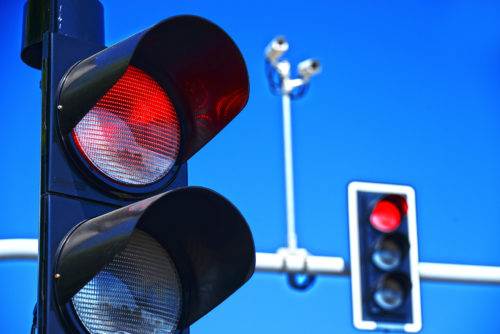
At The Ticket Clinic, we have seen many turning right on a red light camera tickets. The red light camera laws state that a red light camera ticket cannot be issued if the driver makes the turn in a “careful and prudent” manner. While Florida law requires the driver to come to a full stop and a police officer can issue a ticket in person if the driver does not come to a full stop, the red light camera tickets have a lower standard. Yet, because of the vague language cities are taking a liberal reading of “careful and prudent” and issuing red light camera tickets if the driver does not come to a full stop. Many individuals are unaware of this distinction between and chose to simply pay the red light camera ticket because they think they must be guilty. But as long as a pedestrian, bike or oncoming car, a rolling stop when making a right on red that is made carefully should not be a citable offense.
If you have questions about a red light camera ticket for making a right turn on red, contact us at 1.800.CITATION. For over 30 years, The Ticket Clinic has handled solely traffic related offenses and DUI. We are leading the fight against red light cameras!
Fighting a Red Light Camera Traffic Ticket in Florida
Maybe you turned right at a red light, stopped over the line at the intersection, or passed through just as the light turned red. If so, you may come to receive a hefty fine in the mail if you have been found in violation of a red light camera. Understanding how these devices work and how to dispute them may help you prevent a steep fine, higher insurance premiums, and other consequences on your driving record.
Not all states and counties have red-light cameras in use. According to a report by the Florida Department of Highway Safety and Motor Vehicles in 2017, 63 Florida jurisdictions implement the use of these devices.
Red light cameras are a relatively new photo enforcement technology that is becoming increasingly prevalent in Florida intersections. These devices are used to automate the process of recording drivers committing a red light violation, serving as a major ally in prosecution. As a driver passes over a sensor in the intersection while the traffic signal is red, a camera is activated, taking pictures of the driver and their front license plate. After the violation is recorded, an enforcement program issues a citation, which is then mailed to the registered owner of the vehicle. The red light camera can also capture up to 12 seconds of video as further evidence of the crime committed.
Due to the timeliness of these photos, many drivers are caught “red-handed” in an illegal act, like passing through an intersection while the signal is red. Though these may seem like indisputable pieces of evidence, there are still ways for drivers cited by these cameras to fight the tickets.
While many states vary in who is held responsible when a red light camera captures a violation, in the state of Florida, the registered owner of the vehicle receives the bill. This means that if someone is borrowing your car and triggers a red light camera, you will likely be the one to receive the citation.
In some situations, like in the case of a recently-sold car under new ownership or a stolen vehicle, the citation issued can be dismissed with the submission of an affidavit. It is recommended that drivers seeking dismissal should consult a local attorney specializing in traffic tickets for proper guidance.
Red Light Cameras in the state of Florida capture a number of violations, many of which are accompanied by a citation in the mail issued to the owner of the car. Failing to make a complete stop when turning right at a red light, passing through an intersection while the light is red, or stopping in the middle of an intersection during a red light can all result in a Notice of Violation (essentially, a ticket in the mail). Legally, each of these violations will result in a citation for s, 316.075(1)(c)1., Fla.Stat., which mandates drivers to come to a complete stop before a red light. These violations are captured in both photo and video form by the red light camera.
It is important to note that not all photos that were taken result in a violation. For instance, breaking beyond the line at a red light may trigger a camera without a violation having occurred. Every image captured by a red light camera is eventually reviewed by a police officer, who will decide whether the driver was in violation of traffic laws.
Over the years, there have been many debates over the legality of police departments utilizing red light cameras provided by third-party vendors. Florida’s House approved a statewide ban on these devices in 2017, however, soon after the Florida Supreme Court ruled that red light cameras are legal and may be used in the interest of public safety.
Since the ruling, some cities in Florida have chosen to end their use of Red Light Cameras, while others continue to use them. For instance, in Palm Beach County, only Boynton Beach is currently using these cameras.
For the most accurate information regarding the locations of red light cameras, drivers should check their city’s website. Most cities post the location of cameras, the fines associated with citations issued from the cameras, and the process of receiving and paying or disputing a citation.
While some cities in Florida have refused to reactivate their cameras since the ruling in 2017, they are within their rights to reactivate them at any time. Your best course of action at any traffic signal is to obey state laws and wait until the light turns green.
Costs can vary depending on the county, but the typical cost for a red light camera ticket in Florida is $158. This fee can rise to $262 if you fail to pay the ticket after the first mailed notification.
If you receive a traffic ticket from a red light camera and do not choose to contest the citation, you must pay the fine listed on the ticket within 30 days of receiving it. If you do so, no points are added to your record. However, if you miss this deadline, not only will your fine increase, but you will also incur court costs and three points on your license.
Continuing to ignore the citation can result in the suspension of your license,
even higher fines, and the fee of reinstating your driver’s license.
If you plan to contest the violation, your first step should be finding a local attorney that specializes in traffic tickets.
An attorney can guide you through the legal red tape, ensure that all deadlines are met and all evidence is gathered and presented in the way that best represents your case.
A great way to increase your chances of reducing the fine or getting the charge dismissed entirely is to call the lawyers at The Ticket Clinic or hire us online.
Since 1987, The Ticket Clinic has resolved over 3,000,000 traffic-related cases across the nation. Call 1-800-CITATION (1-800-248-2846) now for your free consultation!
On this rainy South Florida day, we thought that all of our readers nationwide might benefit from some tips about how to drive in the rain:
1) Slow down. Yes, this is an obvious one. But it is the most important. When it rains the roads are slippery. So slow down!
2) Turn on your headlights. Many cars are equipped with day time running lights but it’s a good idea to also turn on your headlights, which are a bit brighter and can help other cars see you better.
3) Try to stay in the middle lanes since water tends to pool in the side lanes.
4) But if you approach an area where the water seems especially deep, proceed slowly if at all. Water that rises up to the doors can damage your car. When in doubt, turn around and find another route.
5) Don’t tailgate. Stay a safe distance behind other cars to avoid rear-end collisions and to avoid the splash from the car in front of you.
Also, don’t forget to check your wipers periodically and change dull blades so you aren’t struggling to see out your windshield in a torrential downpour!
Drive safely and stay dry.
Disclaimer: The information contained on this website and any linked resource is intended to provide general information about legal matters to the public and does not constitute legal advice and should not be treated as such. The content is not guaranteed to be correct, complete, or up-to-date. NO ATTORNEY-CLIENT RELATIONSHIP. The use of the website does not create an attorney-client relationship. The transmission of information via the website does not create an attorney-client relationship between you and The Ticket Clinic, A Law Firm. Nothing presented on the website constitutes legal advice and shall not be relied upon in any way. Until a signed representation and fee agreement and acceptance of the terms and conditions here and required payment is received and written confirmation from us, there shall be no attorney-client relationship created. No legal advice is being provided. The website is maintained for informational purposes only. Nothing appearing on this site shall be considered legal advice and is presented only as a general statement of the law. Users of the website should not act, or decline to act, based on information or content from this website. The Ticket Clinic, A Law Firm is not liable for the use, or interpretation, of information contained on the website or otherwise presented on accessed through the website, and expressly disclaims all liability for any actions you take or do not take, based on the website's content. *For certain non-moving violations, ask for details. "This disclaimer governs your use of our website; by using our website, you accept this disclaimer in full. If you disagree with any part of this disclaimer, do not use our website. We reserve the right to modify these terms at any time. You should therefore check periodically for changes. By using this site after we post any changes, you agree to accept those changes, whether or not you have reviewed them."